February 1, 2, and 3 are days traditionally associated with looking for spring to arrive. February 1 is St. Brigid's Day. February 2 is Candlemas, more commonly celebrated in the USA on this date is Groundhog Day. February 3 is the Japanese holiday called Setsubun. It's interesting to compare how all these late-winter-but-looking-for-spring holidays are similar.
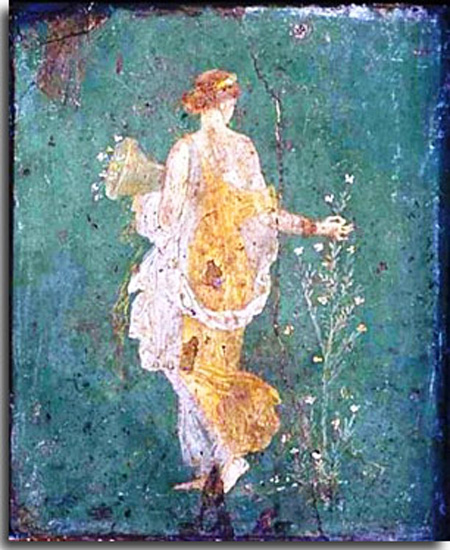
"February" comes from the Roman "Februa," a purification festival held at this time of year, associated with spring cleaning or washing. Many of the February first festivals have to do with getting rid of winter illnesses. One of my favorite things to do this time of year, when the sun shines on rare occasion and I finally notice all the winter dust on the floors, is to clean while all the windows are open. I turn off the central heat as well and let the house get as cool as it can for a day. (Here, that means it gets down to about 60F without the heat on for 12 hours. Outdoors it is usually 40-50F.) Letting in fresh, frigid winter air is a common way of airing out the house and getting rid of dampness that encourages bacteria to grow. And it just makes everything smell better.
St. Brigid's Day (Feb. 1) was important to the early Scots and Irish. It is also called Imbolc, and marks the halfway point between the winter solstice and the spring equinox. Unlike the English, who got many of their festival customs from the Romans and so celebrated the quarter days (Dec 25, March 25, June 24, Sept 29), the Scots and Irish seem to have marked the cross-quarter days (Feb 1, May 1, August 1, Nov. 1) with feasting and celebrations. This is also when the rents and repayment of debts were due, and later, when school terms began.

I don't know a lot about Brigid, but supposedly she was a pagan goddess whose legend merged with that of a Christian saint. She's associated with fire (another form of purification), and the blessing of the earth in preparation for new planting. Somewhat similar to leaving out milk and cookies for St. Nick, the ancients would prepare a hospitable welcome for Brigid by making up a bed of hay for her, someone would dress up as Brigid and knock to be let in, and then the blessing and feasting would begin. Hospitality was rewarded with a good planting season. St. Brigit of Kildare was an early Irish (5th C.) monastic and her relics are now in Portugal. There were apparently a lot of early saints named Brigid and their legends and lives have all gotten put together over time.

February 1 was also ideally the date to begin plowing the fields in England, called Plough Monday, but it could be moved to an earlier or later Monday after Epiphany depending on the weather. The women went back to work earlier (of course), on January 7, Distaff Day, when spinning began again after the twelve days of Christmas holidays. Sometimes Plough Monday and Distaff Day fell on the same day.
 |
| Folk getting up to all kinds of crazy for Plough Monday. |
 |
| Conspicuously less merriment associated with Distaff Day. |
Candlemas (Feb. 2) is shorthand for the Feast of the Purification, which marks the 40th day after Christmas, when the Virgin Mary, a law-abiding Jewish mother, presented herself for ritual purification at the temple after giving birth to a son. (Giving birth to a girl baby required 80 days of waiting before purification. This has to do with taboos about bodily fluids leaving the body. A menstruating woman, for instance, could not enter the temple.) On this feast day, we remember when Mary presented herself, and met Anna and Simeon, and they recognized Christ as the Light of the World. Thus, the candles of Candle Mass. It became a traditional time to bless all the candles that were made over the long winter to be used in the coming year. Candle-making was a task that could be done in winter because the harvest was done and energy could be given to less essential tasks, like household repairs and handicrafts. Some people wait until this date, the very last gasp of Christmas celebrations, to take down the holiday decorations.


In the USA, we have Groundhog Day on Feb. 2. The groundhog, a large hibernating rodent, is supposed to be lured from his hole in the ground. If he sees his shadow, spring is on the way. If not, then six more weeks of winter will be expected. (This year, no surprise to many, he did not see his shadow.) The tradition of observing hibernating animals, or by observing the weather of Feb. 1, to forecast the weather is common. In Europe, it was a beaver, wolf, or bear. I think it all comes from eager farmers wanting to know how soon they could plant. There's nothing worse than investing time and energy into planting and having a surprise freeze kill everything in one night.
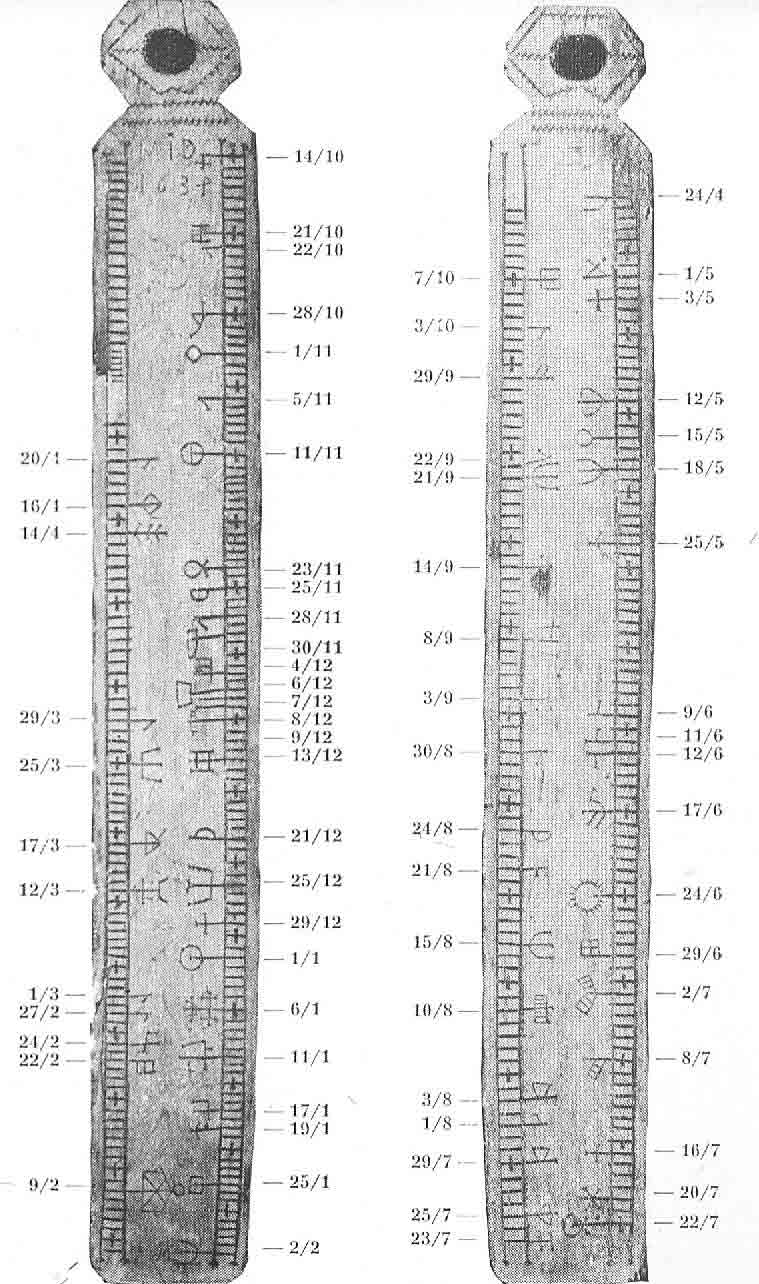
The Scandinavians had a seasonal calendar called a Primstav, or runic calendar. Basically, it is a flat wooden stick (something like a fancy yard stick) with notches and carved runes on two sides, one for winter, one for summer. Many cultures only divided the year into summer and winter. A primstav was a practical decoration for a farmstead and usually hung by the front door. Another translation of primstav is primspell. Besides the blessing of candles at this time, Candlemas was the halfway point for the winter season and farmers checked their animal feed at this point. Early spring was often a time of great hunger if winter stores were used up too early.

Something interesting I read recently is that St. Valentine's Day, Feb. 14, would have fallen about two weeks earlier in the Julian calendar, Feb. 1. Before he was associated with romantic love, his feast day was associated with the early spring. This may have been the date of his actual martyrdom (he was a Christian priest in a time of persecution) or it may have been one of those situations where his veneration was placed on top of an already important date for the Romans, Februa.

Feb. 3 is St. Blaise's Day and again there is the theme of purification and candles. St. Blaise's story is that he was a physcian, then later a hermit and a bishop, who cured a child that had been choking on a fish bone. The custom on this day was to bless those with throat ailments or other illnesses. Part of the ritual is to hold two long crossed candles around the neck, or in blessing over the congregation. What could be a more appropriate prayer at the height of flu season than to ask God for healing?

Mamemaki is a Japanese ritual that is part of the spring holiday (Haru Matsuri), also marked on Feb. 3. This date is called Setsubun. I only know about this one because a family I am friends with celebrates it every year. They throw soybeans out the front door (or at a family member wearing a mask) and shout "Demons out! Luck in!" and slam the door on last year's bad luck and disease-bringing evil spirits.
 |
| Detail, Winter Quarter Year Calendar |
 |
| February, Tres Riches Heures Duc du Berry |